Vision
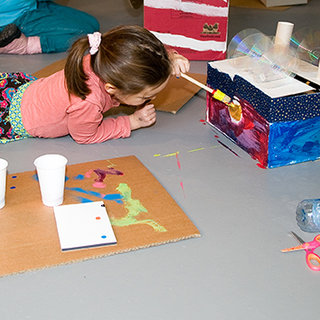
Photo of one of Andersen’s Magic Machines workshops.

Self-representation by Lee Broek in Hidden in Plain Sight.
Professional identity
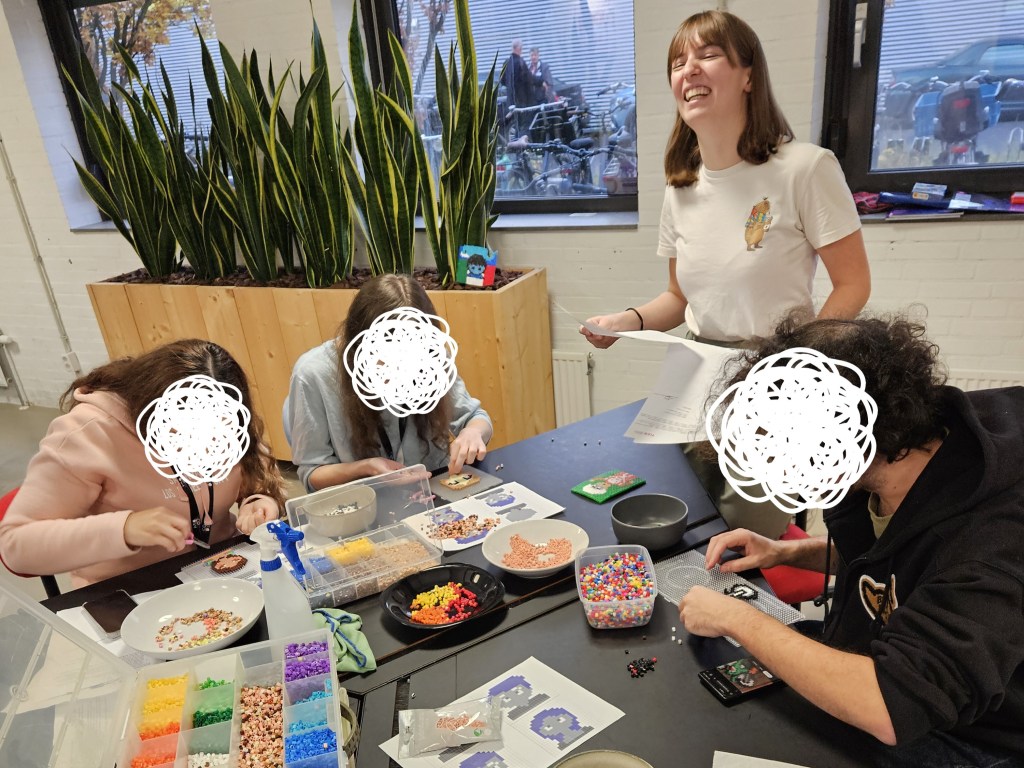
Facilitating the creation of iron-on beads self-representations during my M2.1 project.
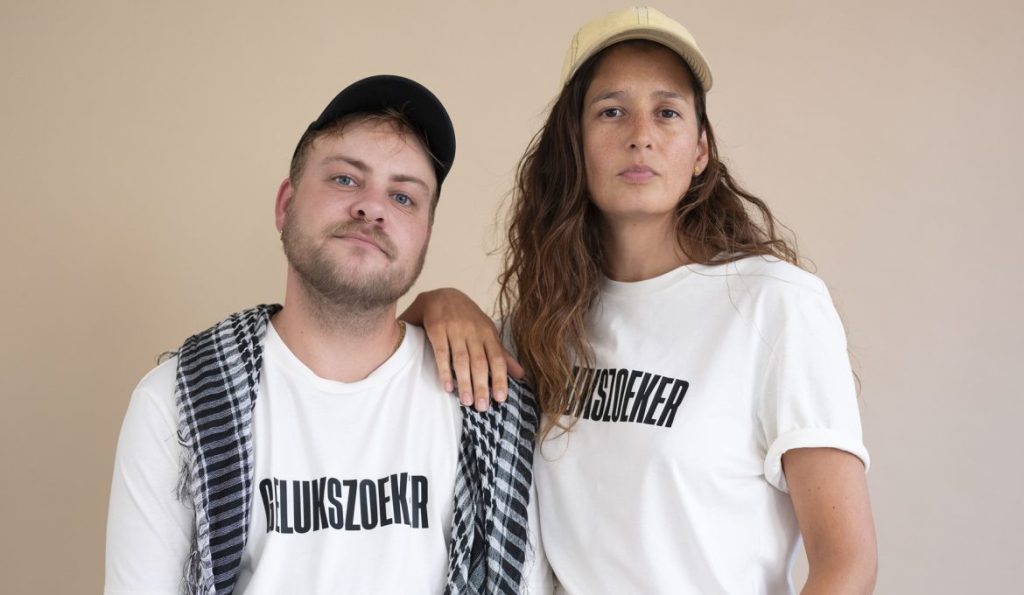
T-shirts Stichting Gelukszoekers sells to raise money for people with refugee backgrounds
I believe traditional product designers should critically reflect on their work, especially when it simply responds to existing norms and expectations in society. Their approach might seem user-centered, but if it is not questioned, it can reinforce a harmful status-quo [1][2].
Langdon Winner, a scholar in science and technology, reflects on the politics of artifacts. According to his framework, some designs have clear political consequences, while others do not [3]. For example, scissors are quite neutral, but surveillance cameras are explicitly designed to control. However, the most complex category consists of artifacts with ‘unintended political consequences’, such as anti-aging products. Anti-aging products only make sense in relation to our cultural obsession with youth. The more we value looking younger, the more anti-aging products we have, which in turn reinforces the need to look younger [4]. This cycle sustains narrow norms around how people should look, and marginalizes people that do not conform.
To move beyond this, I aim to expose divisive designs and propose alternatives that foster empathy and community. In my work, I create low-threshold, participatory interventions that invite people to represent themselves through accessible crafting materials. These interventions allow for self-representation in the broadest sense: not only reflecting appearance but also expressing how you wish to be seen or how you feel. Through this, participants can express and understand their own and each other’s lived experiences, to foster connection.
My approach is inspired by Andersen’s Magic Machines workshops [5][6] and Lee Broek’s photo series Hidden in Plain Sight [7]. In the workshops, participants build whimsical “machines” to reflect a personal desire or need. This light-hearted method can lead to unexpectedly honest and emotional expression. Similarly, Lee Broek’s self-representations visualize the experience of being autistic in a neurotypical world, which is hard to explain with words alone. These works show how design can translate inner experiences into shared understanding, and this is the kind of design I strive to practice: one that amplifies diverse voices and contributes to a more empathetic and connected society.
As a social designer, I prioritize understanding and addressing the needs of the people I design with and for. Empathy and my natural social sensitivity guide my approach and the direction of my projects. I am curious and inquisitive, with a genuine interest in the experiences and perspectives of others. I thrive in collaborative environments, where diverse perspectives and complementary talents can be brought together.
My focus lies in strengthening communities and I believe that communities thrive when people feel seen, heard, and accepted for who they are [8][9][10]. In my work, I act as both a creator and facilitator, crafting low-threshold, participatory interventions that allow people to create self-representations through accessible materials. These interventions help translate subjective experiences into shared understanding and amplify voices that are often overlooked [5][6]. In doing so, I aim to challenge divisive design norms and foster empathy and connection. To navigate such an open-ended socially relevant design process, I use the Reflective Transformative Design approach [11]. I begin by immersing myself in the community I aim to design with. By understanding their experiences and perspectives, I propose a crafting intervention that is shaped and refined based on participant feedback.
My areas of expertise lie in User & Society and Creativity & Aesthetics. Throughout my Master’s, I’ve also grown significantly in Technology & Realisation and Business & Entrepreneurship through high-fidelity prototyping and collaborations with external stakeholders. My competence in Math, Data & Computing is intermediate, and I aim to develop it further, especially in using quantitative data to support and validate the impact of my designs.
My ideal career path would be working with socially driven design (research) initiatives where I can continue to strengthen and apply both my creation and facilitation skills. One example is Stichting Gelukszoekers [12], a social design initiative that challenges stereotypes by co-creating products grounded in the lived experiences of people with refugee backgrounds. In addition to raising awareness, they directly support this community by donating their profits to Stichting Here to Support.
 Dana Starmans